A file ending in .Z08 is best understood as one volume in a segmented backup or distribution set rather than a standalone compressed file. Most commonly it belongs to a split ZIP archive, where files are divided into pieces named .z01, .z02 through .z08 and finally .zip, with each numbered part holding a portion of the compressed data while the last .zip segment stores the central directory and file list. Depending on the program that created it, .Z08 may therefore be either a ZIP-style split part or a RAR-style volume, but in both cases it is only a fraction of the full archive. Because of this segmented design, a .Z08 file on its own is incomplete and will usually appear “corrupt” if you try to open it directly; the correct workflow is to place all parts in the same folder and open either the main .zip file or the first volume of the RAR set in your archiver so it can read every segment in order. Tools like FileViewPro effectively turn a confusing array of .z0N pieces into a single, straightforward extraction process, so you can focus on the recovered files rather than on how the archive was split.
Compressed archives are efficient storage bundles that minimize file size without changing what the files actually contain. Fundamentally, they operate by analyzing patterns and redundancy in data and then representing that information in a more efficient way. Because of this, the same drive can hold more information and uploads and downloads finish sooner. Whether it is one spreadsheet or a full collection of mixed files and subfolders, everything can be bundled into a single compressed package, all wrapped into one smaller file than the originals. This flexibility explains why compressed files show up in so many places, including installers, system backups, shared folders, and large media collections.
The history of compressed files is closely tied to the evolution of data compression algorithms and the growth of personal computers. Early on, academics including Lempel and Ziv created methods such as LZ77 and LZ78, which showed that repeating patterns in data could be encoded more compactly and reconstructed perfectly later. These ideas eventually led to widely used methods like LZW and DEFLATE, which power many popular compression formats today. In the late 1980s and early 1990s, developers like Phil Katz helped bring file compression to everyday users with tools such as PKZIP, which popularized the ZIP format and established a simple way to bundle and shrink files on early systems. Since then, many alternative archive types have appeared, each offering its own balance of speed, compression strength, and security features, yet all of them still revolve around the same core principle of compact packaging.
From a technical perspective, compression methods fall broadly into two families: lossless and lossy. Lossless approaches keep every single bit of the original, which is critical when you are dealing with applications, spreadsheets, code, or records. That is why traditional archive formats prioritize lossless compression: when you extract them, your content comes back unchanged. On the other hand, lossy methods trade some detail for dramatic size savings, most commonly in music, film, and visual content. Whether it is a generic archive or a specialized media format, the underlying goal remains to squeeze out wasted space while keeping the content useful. In most archive formats, compression is tightly integrated with packaging, so you can both reduce size and preserve a complete directory layout inside a single file.
With the growth of high-speed networks and powerful devices, compressed files have found increasingly sophisticated roles. One major use case is software delivery: installers and app bundles are often compressed so users can get them faster and then expand them locally. Large content libraries are typically stored in compressed archives so that they occupy less disk space and can be patched or replaced without touching the rest of the installation. For administrators and DevOps teams, compression is tightly woven into tasks like archiving server logs, packaging build artifacts, and moving configuration bundles between machines. Cloud services also rely heavily on compression to cut bandwidth usage and storage costs, which makes it practical to synchronize and replicate large data sets across regions and devices.
Another important dimension of compressed files is their role in archiving, long-term storage, and security. By shrinking data, they make it feasible to store large email archives, research collections, project histories, and media libraries on external drives, tape systems, or cloud backup services. Many archive formats include integrity checks so users can verify whether the contents are still intact or have been corrupted over time. Some formats also support encryption and password protection, allowing sensitive documents to be stored in a compressed file that is both smaller and shielded from unauthorized access. This combination of compactness, structure, and optional security has made compressed files a natural home for financial records, contracts, proprietary code, and other confidential material.
On the practical side, compressed files remove a lot of friction from sharing and organizing information. Rather than attaching every file one by one, you can pack them into one archive and send just that, cutting down on clutter and transmission time. Archives preserve directory layouts, which prevents confusion about where each file belongs when someone else opens the package. In many cases, applications and support tools automatically generate compressed files when exporting projects, collecting log bundles, or preparing backups. Learning how to open, inspect, and extract compressed archives has therefore become a basic computer skill, not just something for advanced users or IT professionals.
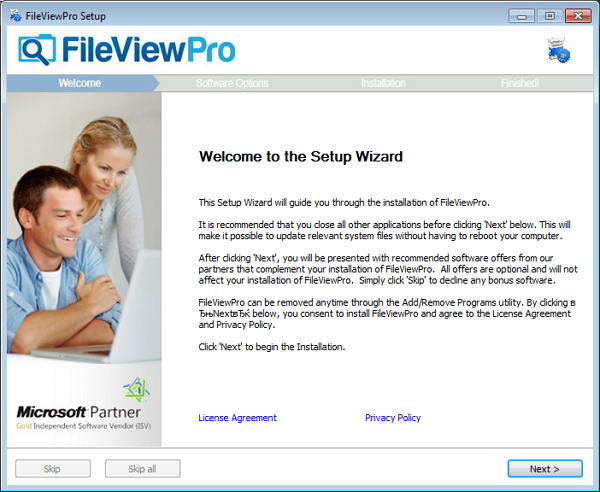
With numerous formats in the wild, it is common for users to run into archives they have never seen before and are not sure how to open. A utility like FileViewPro helps solve this problem by recognizing a wide range of compressed file types and presenting their contents in a clear, user-friendly interface. With one consistent workflow for many different formats, FileViewPro reduces the risk of errors and saves time when handling compressed archives. If you have any queries regarding wherever and how to use Z08 file technical details, you can get hold of us at the website. For anyone who regularly downloads software, works with shared projects, or receives large bundles of documents, having a dependable way to open and manage compressed files through FileViewPro turns compression technology into something practical, convenient, and easy to trust.
The role of compressed files is likely to grow even more important as digital content keeps expanding. Ongoing research aims to squeeze more out of data while still keeping compression and decompression fast enough for real-time applications. Despite all the innovation, the core goal has not changed; it is still about making big things smaller and more manageable. In every scenario, from home PCs to enterprise servers, compressed files make data easier to move, store, and protect. With the help of FileViewPro to open, explore, and extract these archives, users can take full advantage of compression without needing to understand the complex mathematics behind it, turning a powerful technical concept into a simple, everyday tool.
When I originally commented I clicked the “Notify me when new comments are added” checkbox and now each time a comment is added I get several emails with the same comment. Is there any way you can remove people from that service? Many thanks!